NIGER GOVERNMENT PARTNERS U.S. ON SURVEILLANCE TO PREVENT DISEASE OUTBREAK
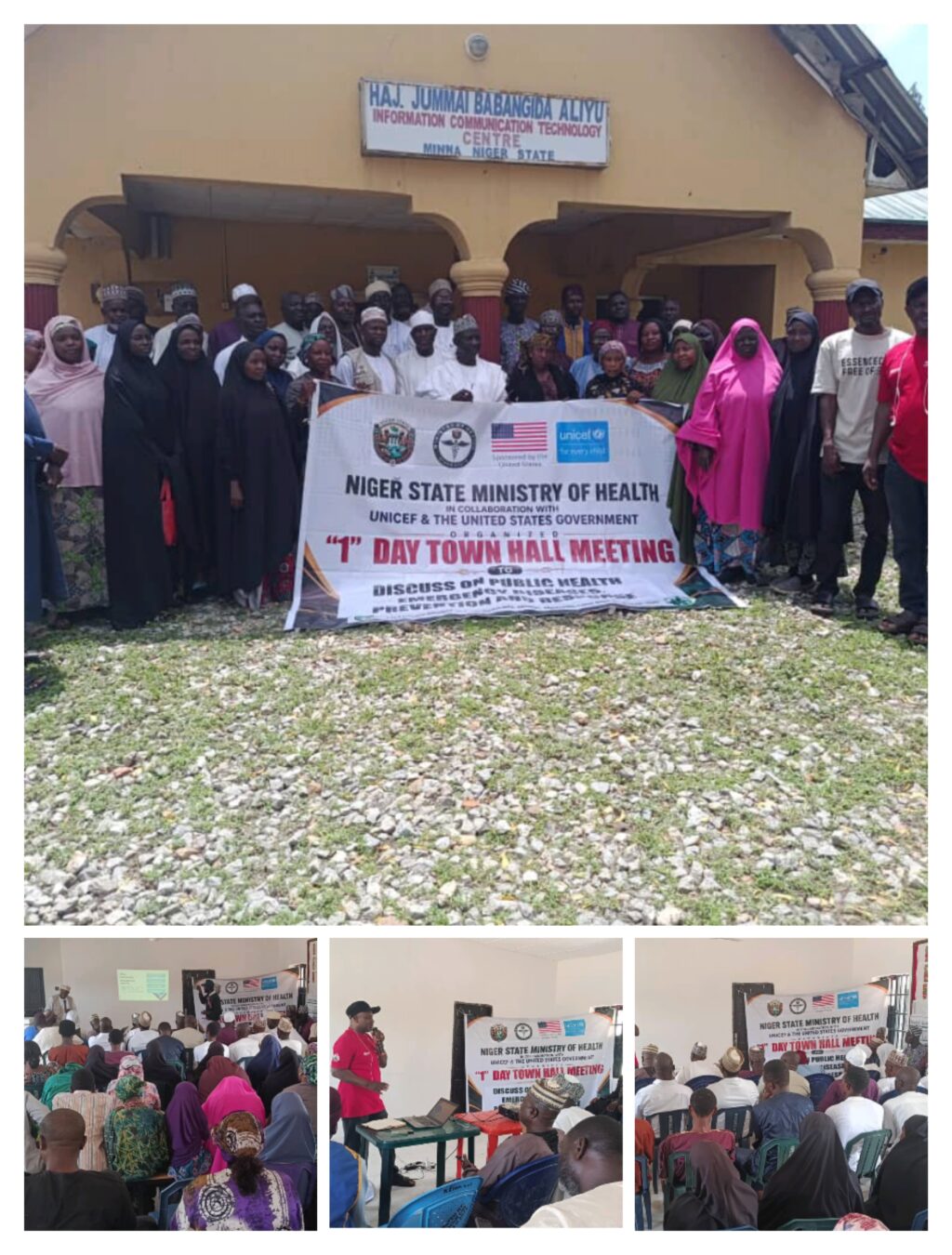
The Niger State government has organized town hall meetings for 350 community, traditional, and religious leaders across six LGAs, as part of efforts to strengthen disease surveillance and improve emergency preparedness across the state,
Reports have it that, there are three new cases of polio in Magama and Mariga local government areas and diphtheria cases in Bida, Chanchaga and Suleja LGAs.
State Immunization Officer, Abubakar Kpantu said during a town hall meeting on Public Health Emergency Disease Prevention and Response organized by the Ministry of Health in collaboration with the United Nations Children’s Fund (UNICEF) and the United States of America (USA) Government that the meeting is to curtail any form of disease outbreak.
According to him “for years we had not recorded any cases of polio, but recently, three cases were detected in Mariga and Magama LGAs while other cases of diphtheria have been recorded in Suleja, Bida aand Chanchaga LGAs.
“This calls for increased vigilance and renewed commitments to routine immunization and and community awareness.
“Since the rainy season began, health authorities are closely monitoring the possibility of outbreak of cholera and any other communicable diseases.”
The event which held in Bida, Bosso, Chanchaga, Gbako, Gurara, Kontagora and Suleja LGAs brought together health stakeholders, community, traditional and religious leaders, development partners, and residents to discuss strategies for preventing and responding to public health emergencies.
According to Kpantu “the town hall meeting is aimed at enhancing community awareness and preparedness and it is very key in addressing likely outbreak of diseases like meningitis, measles, diphtheria, cholera, Mpox, and others.”
In his presentation, UNICEF Social and Behaviour Change State Facilitator, Adamu Mamba enlightened participants on the importance of early disease detection, prompt reporting of suspected cases, and adherence to public health guidelines.
He emphasized the role of traditional, religious, and community leaders in strengthening public health emergency response through effective Risk Communication and Community Engagement (RCCE).
According to him, community participation is vital to improving vaccine acceptance, supporting outbreak response efforts, promoting accurate health information, and countering misinformation through fact-based communication and trusted community voices.
He then urged participants to support outbreak response activities, promote preventive health practices, and strengthen community feedback mechanisms.
About The Author