NIGER NIPR BOOK READING: AUTHOR CHAMPIONS PROFESSIONAL LICENSING TO STRENGTHEN CREDIBILITY OF PR PRACTICE IN NIGERIA.
By Mahmud Abdullahi, MNIPR
Chairman, NIPR Niger State Chapter.
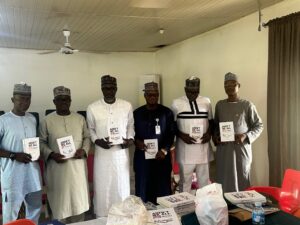
An author and public relations practitioner, Ahmed Balarabe Sa’id, MNIPR, has called on communication practitioners and aspiring professionals to embrace professional registration, licensing and ethical standards as critical measures for strengthening the credibility, accountability and future of public relations practice in Nigeria.
Sa’id made the call at a public reading of his book, Aren’t We All PR People? A Frank Guide for Beginners and Practitioners, organised by the Nigerian Institute of Public Relations (NIPR), Niger State Chapter, at the IBB Pen House, NUJ Secretariat, Tunga, Minna.
He urged practitioners to identify with the Institute, fulfil the prescribed professional requirements, undergo the necessary induction and obtain the appropriate licence to practise, stressing that professional regulation is essential to maintaining standards and public confidence in the profession.
Explaining his motivation for writing the book, Sa’id said it was aimed at broadening public understanding of public relations and challenging the misconception that the profession is limited to publicity, image management and media relations. He described public relations as a strategic discipline anchored on truth, courage, ethical responsibility and effective relationship management, noting that practitioners must demonstrate integrity and have the courage to communicate truthfully, even in challenging circumstances.
Addressing the perception that a degree in Mass Communication is a prerequisite for becoming a public relations professional, he clarified that individuals from other academic disciplines could also pursue careers in the field by meeting the professional requirements established by NIPR. He encouraged aspiring practitioners to take advantage of the Institute’s professional development opportunities to acquire the requisite knowledge, recognition and credentials.
The author further identified ethical listening, message clarity, message verification, cultural and digital literacy as essential competencies for contemporary practice. He stressed that effective public relations goes beyond information dissemination to understanding audiences, listening to stakeholders, building trust and maintaining meaningful relationships.
He also underscored the importance of embracing technology and new media while upholding professional ethics, accuracy and responsibility in an increasingly complex information environment.
Sa’id equally emphasised continuous learning as a fundamental requirement for professional competence, urging students, young practitioners and established professionals to cultivate deliberate reading habits.
He maintained that the secret to deeper professional knowledge and intellectual development lies in the text, encouraging practitioners to look beyond workshops and seminars and make reading an integral part of their professional growth.
In his remarks, the Chairman of the Nigeria Union of Journalists (NUJ), Niger State Council, Dr. Abu Nmodu, called for stronger synergy between NIPR and NUJ to promote professional standards, improve information management and address emerging challenges in the communication industry.
Dr. Nmodu observed that journalism and public relations operate within closely related professional spaces, particularly in information gathering, processing, management and dissemination.
He advocated regular engagements, knowledge sharing and collaborative initiatives between the two professional bodies to strengthen professional capacity and build a more credible communication environment.
Also speaking, the Director of Public Relations, Nigerian Hydro Power Producing Areas Development Commission (NHYPADEC), Malam Nura Wakili, stressed the need for professional reputation management to be accorded the seriousness it deserves.
He described reputation as a critical asset for individuals, organisations and institutions, requiring deliberate management, strategic communication and sustained professional commitment.
He cautioned against reducing reputation management to publicity and occasional image-building exercises, maintaining that it must be treated as a continuous professional responsibility anchored on credibility, consistency, ethical conduct and effective stakeholder engagement.
A major highlight of the event was a fireside conversation coordinated by the Director of Information and Public Relations, Niger State Ministry of Information and Orientation, Malam Yunusa Abugi, who engaged the author on the central arguments of the book and the salient issues that make it relevant to contemporary public relations practice.
The interactive session explored the distinction between everyday communication and professional public relations, the place of ethics in reputation management, professional regulation, and the influence of technology and new media on institutional reputation and public perception. It also examined the responsibilities of practitioners in building institutional credibility, managing stakeholder relationships and sustaining public trust in an increasingly complex information environment.
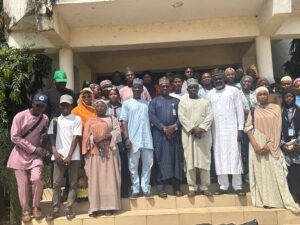
The engagement brought together communication professionals, media practitioners, students and other stakeholders, including the NIPR Chairman, Niger State Chapter; the Head of the Public Relations Office, NHYPADEC; students from Abdulkadir Kure University, Minna, and Justice Fati Lami Institute of Legal Studies; staff of the Niger State Ministry of Information and Orientation; and Prestige FM.
The participation of students provided an opportunity for aspiring professionals to gain insight into the ethical responsibilities, professional expectations and competencies required to build successful careers in public relations.
The event reinforced the importance of professional regulation, continuous learning and inter-institutional collaboration in strengthening the credibility and future of public relations practice in Nigeria.
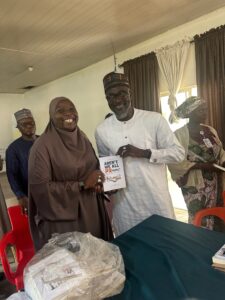
It concluded with a book-signing session by the author and group photographs with participants and invited guests.
About The Author